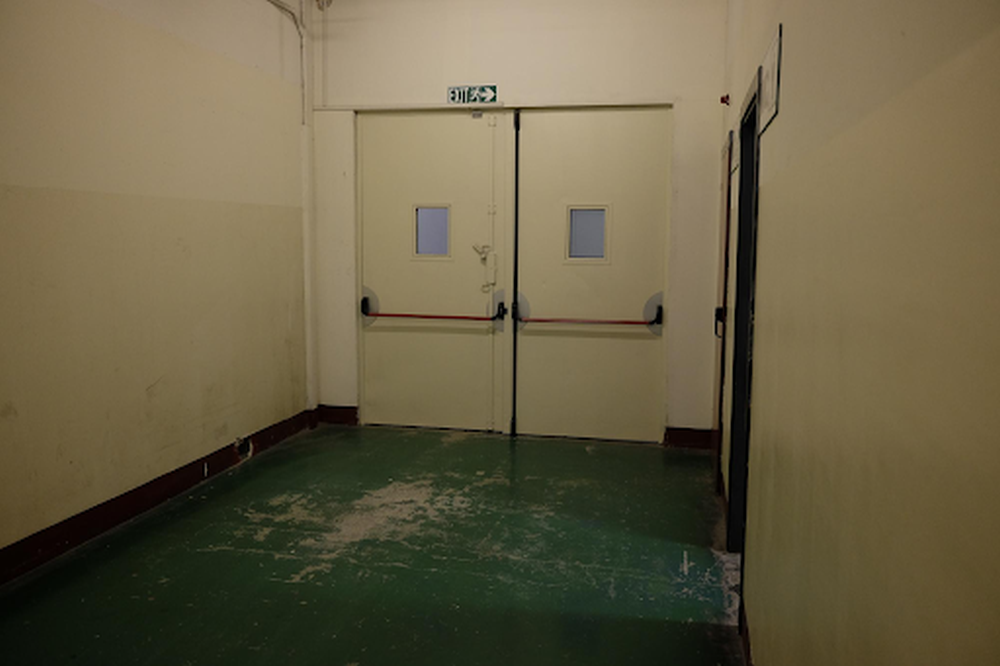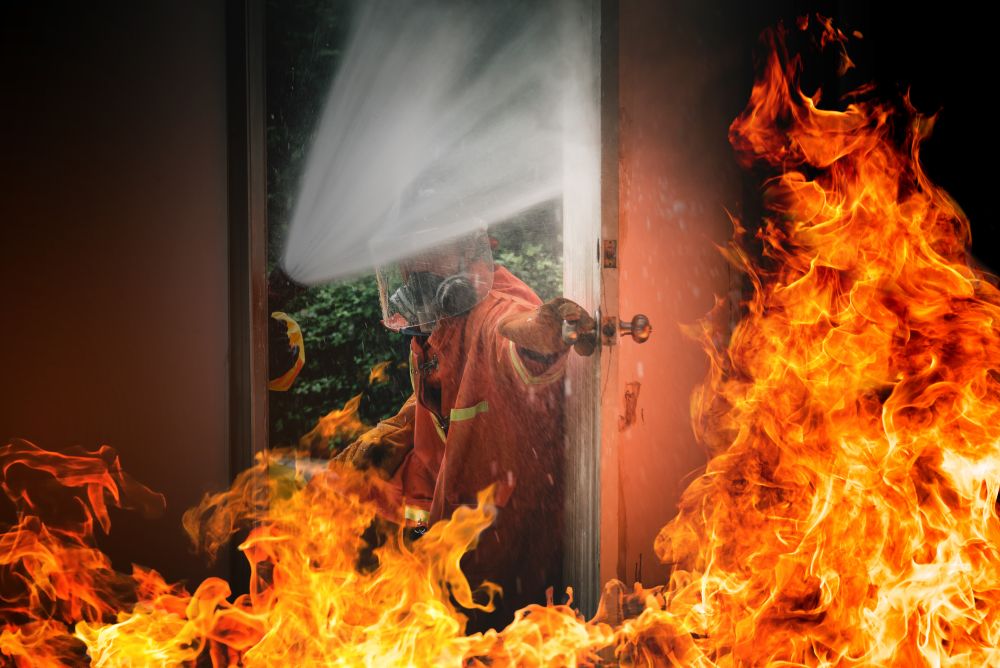
Choosing a Boon Woh fire rated door in Singapore involves more than selecting a design or a door leaf. A fire door is a regulated safety product, and the piece that actually protects a building is the complete doorset, the leaf, frame, seals, hinges, closer and locks working together as a tested assembly. Boon Woh Woodwork Co. has been a door specialist and woodwork contractor since 1949, supplying certified fire rated doors with proven products, proper paperwork and one accountable team from supply through to handover. This guide covers what a fire-rated door is, where it is required in Singapore, how ratings and certification work, timber versus metal, real pricing, lead time, and the most common buying mistakes.
A fire-rated door is designed to resist the passage of fire and smoke for a defined period of time, buying occupants time to escape and helping to contain a fire so it does not spread between compartments. Under the Singapore’s Fire Code, each unit or protected space is treated as a fire compartment, and the door is what keeps that compartment sealed during a fire.
The important distinction is between an ordinary door and a certified fire door. An ordinary timber door, even a heavy, solid one, is not automatically fire-rated. A certified fire door has been tested as a complete assembly and shown to hold back fire and smoke for its rated time. That is why the complete doorset matters: the door leaf alone is not enough, because the frame, seals and self-closing device all contribute to the rating.
Fire-rated doors appear across almost every building type in Singapore. In HDB flats, the main entrance is usually required to be a fire-rated door: under the Singapore’s Fire Code each flat is treated as a fire compartment, so a fire-rated main door is required, except where the door opens directly onto an external or common corridor that dissipates heat and smoke. Where the main door is more than 3 metres from the nearest fire escape staircase, a fire-rated door is required, and a self-closing device is part of that requirement. Any HDB main-door replacement needs a permit, which only an HDB-licensed contractor may file.
Condominiums and private residential buildings use fire-rated doors at unit entrances, staircases, riser cupboards and shared service areas. Commercial buildings extend this much further, offices, hotels, shopping centres, healthcare buildings, educational facilities, warehouses, plant rooms, electrical rooms and protected escape routes all rely on rated doors, often at higher ratings than a typical home.
Fire doors are described by how long they resist fire. Common ratings are FD30 (½ hour), FD60 (1 hour), FD120 (2 hours) and FD240 (4 hours), with higher ratings used for specialised industrial applications. As a rough guide, HDB flats generally require a half-hour (FD30) door, while commercial and condo compartments such as escape staircases and plant rooms need FD60 and above. Boon Woh supplies certified timber doorsets up to 2-hour (FD120) and steel doorsets up to 4-hour (FD240).
| Rating | Resists fire for | Typical use |
| FD30 (½ hr) | 30 minutes | HDB and residential main doors |
| FD60 (1 hr) | 60 minutes | Corridors, escape routes, condo separating walls |
| FD120 (2 hr) | 120 minutes | Major fire compartments, service rooms |
| FD240 (4 hr) | 240 minutes | Plant rooms, industrial, hazardous-material stores |
The required rating for any given opening should come from the approved building plans, project specifications or a relevant fire safety professional, not guesswork. If you are unsure, confirm it before ordering.
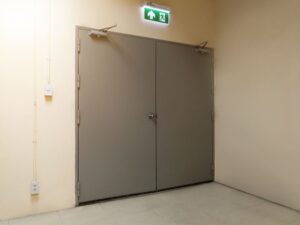
In Singapore a fire door must be certified to SS 332 Clause 5 or EN 1634-1, with fire-resistance testing carried out to BS 476: Parts 20-23. SS 332:2018 is the current standard referenced in the Fire Code. Every certified door must carry a valid Certificate of Conformity (CoC), which is valid for five years, and a serial-numbered product-listing label, usually on the hinge side or top edge.
Boon Woh doors are TÜV SÜD PSB certified. Each doorset comes with a valid Certificate of Conformity and product-listing label, so your QP, FSM or main contractor receives the documentation they need without chasing third parties.
Both timber and metal fire doors can be fully certified, so neither is universally better, the right choice depends on the setting. Timber doorsets offer a warmer appearance, wide finish options and design flexibility, which suits homes, offices, hotels and condo interiors; Boon Woh supplies certified timber doorsets up to 2-hour (FD120). Metal doors are chosen where maximum durability, moisture resistance or the longest ratings are needed, such as plant rooms and industrial areas, with steel available up to 4-hour (FD240). One practical difference: timber fire doors require annual surveillance testing, versus every three years for steel. Our timber fire-rated door article covers timber construction and finishes in detail.
Boon Woh publishes clear starting prices for its certified doorsets. The table below shows current firedoor.sg supply prices for the door and frame:
| TÜV SÜD PSB certified door & frame | Timber (from, excl. GST) | Steel (from, excl. GST) |
| ½-hour (FD30) | S$688 | N/A |
| 1-hour (FD60) | S$788 | S$1,288 |
| 2-hour (FD120) | S$1,888 | S$1,488 |
| 4-hour (FD240) | N/A | S$1,888 |
Prices are firedoor.sg supply prices for the certified door and frame, quoted from the figures above and subject to 9% GST (for example, the ½-hour timber doorset is S$688 or S$749.92 incl. GST). Hardware upgrades, digital locks, vision panels, delivery, permit works and installation are quoted separately. Volume and project orders are quoted per project.
Beyond the rating and material, price is affected by door size and single or double leaf, frame replacement versus reusing an existing frame, finish (laminate, veneer or painted), hardware, digital locks and vision panels, site access and installation conditions, quantity, and urgent production.
Most Singapore suppliers quote around three weeks to fabricate a made-to-order certified fire door. Standard sizes are quicker; custom sizes, higher ratings and premium finishes take longer. Lead time is also driven by whether production is in-house or outsourced, quality control, and, for HDB, permit filing by a licensed contractor. Boon Woh produces in-house with its own experienced installation team, which means fast lead times and faster turnaround without changing the standard the door is built to.
When it comes to a Boon Woh fire rated door in Singapore, the experience is built to reduce risk: proven products, proper paperwork and one accountable team from supply through to handover.
For most HDB flats a fire-rated main door is required, and commercial and condo openings follow the approved plans. Confirm the requirement from your building plans, project specification or a fire safety professional.
No. A heavy solid timber door is not automatically fire-rated. Only a door tested and certified as a complete doorset carries a rating.
FD30 resists fire for 30 minutes and FD60 for 60 minutes. FD30 is typical for HDB flats; FD60 and above are common in commercial and condo settings.
Yes. The rating applies to the complete doorset, so the frame is part of what is certified and should be matched to the leaf. Boon Woh supplies the door and frame together.
Yes, provided it is compatible with the certified doorset. Confirm the model with your supplier before fitting.
Ask for the Certificate of Conformity, check the serial-numbered product-listing label, confirm the rating, and look for the TÜV SÜD PSB mark.
Around three weeks is typical in Singapore. Boon Woh produces in-house, which supports fast lead times and faster turnaround.
Yes. We manufacture custom sizes and finishes for both residential and commercial projects, alongside timber, custom doors and carpentry works.
The correct doorset depends on the required rating, valid certification, the opening and frame, the material, the finish, the hardware and the installation conditions. Get those right and a fire-rated door does exactly what it is meant to, protect people and property while fitting the look of your space.
Send Boon Woh your required rating, opening dimensions and preferred finish for a certified doorset recommendation. Call +65 6283 5329, email Sales@bwis.com.sg, or browse the range at /shop/.